Search
GCF Risk Dashboard (Q1 2021)
The risk dashboard provides an overview of GCF's project and programme portfolio, as well as information on concentration and funding, delays, any reports of integrity or policy breaches, and financial investment risk....
Document > Risk dashboard
Partner agreement after Board project approval to benefit Rwandan farmers
GCF has signed an agreement with the International Union for Conservation of Nature (IUCN) to implement a project enhancing the climate resilience of Rwandan farmers only a day after the project’s approval. The GCF...
Article > News update 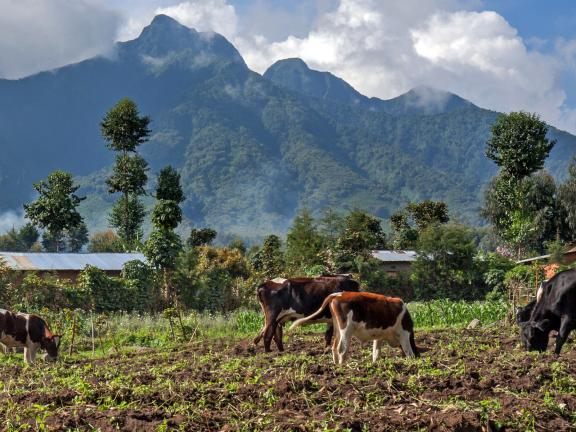
Call for Public Inputs for the continuation of the GCF REDD+ Results-Based Payments Programme
As requested by the Board at its 28th Session, the GCF Secretariat is currently undertaking a further analysis of alternatives for the continuation of the implementation of REDD+ results-based payments (RBPs). The...
Document > Call for input
Readiness audit terms of reference template
The audit terms of reference template serves as a guide in communicating the Green Climate Fund’s auditing and financial reporting requirements for the Readiness Programme to grant auditors
Document > Template
Readiness audit report template
This template aims to provide an illustrative set of audited grant financial statements prepared in accordance with the International Public Sector Accounting Standards under the Cash Basis. The template serves as a...
Document > Template
Project Preparation Facility audit terms of reference template
The audit terms of reference template serves as a guide in communicating the Green Climate Fund’s auditing and financial reporting requirements for the Project Preparation Facility to grant auditors
Document > Template
Project Preparation Facility audit report template
This template aims to provide an illustrative set of audited grant financial statements prepared in accordance with the International Public Sector Accounting Standards under the Cash Basis. The template serves as a...
Document > Template
Implementing the new Green Climate Fund Urban Strategy in Africa
Since 2019, the Green Climate Fund has engaged in the process of developing a Sectoral Guide on “Cities, Buildings and Urban Systems” in order to provide an overview of country needs and evidence-based programming...
Event > Events organised / involving GCF 
Contribution Agreement with Hungary (GCF-1)
Contributions to GCF are facilitated through Contribution Agreements or Arrangements signed by contributors, GCF, and the Trustee, which is the existing mechanism for receiving contributions to the Trust Fund.
This...
Document > Contribution arrangement / agreement Hungary
Restructuring Proposal Template
This template should be completed by Accredited Entities in the preparation of a restructuring proposal to a project under implementation. For guidance on restructuring, please refer to the Policy on Restructuring and...
Document > Template
Decisions made for information disclosure request IDP190
This document lists the decision made with regard to IDP190, received by the GCF Secretariat on 14 June 2021. The request contains one inquiry, which has been denied.
Document > Information disclosure decision
First Hydromet Gap Report calls for scaled-up action
The first Hydromet Gap Report, launched in July 2021, tells us how far we have to go to tap the benefits of effective weather and climate services. It presents the challenges of the complex global and local undertaking...
Article > News update 
GCF/B.29/14 - Decisions of the Board – twenty-ninth meeting of the Board, 28 June – 1 July 2021
Board document > Compendium of decisions
Board document > Compendium of decisions
Leveraging Energy Access Finance (LEAF) Framework
This document presents funding proposal "FP168: Leveraging Energy Access Finance (LEAF) Framework," as approved by the Board of the Green Climate Fund at B.29.
Document > Approved funding proposal Multiple countries
Transforming Eastern Province through Adaptation
This document presents funding proposal "FP167: Transforming Eastern Province through Adaptation," as approved by the Board of the Green Climate Fund at B.29.
Document > Approved funding proposal Rwanda
Light Rail Transit for the Greater Metropolitan Area (GAM)
This document presents funding proposal "FP166: Light Rail Transit for the Greater Metropolitan Area (GAM)," as approved by the Board of the Green Climate Fund at B.29.
Document > Approved funding proposal Costa Rica
Building Climate Resilient Safer Islands in the Maldives
This document presents funding proposal "FP165: Building Climate Resilient Safer Islands in the Maldives," as approved by the Board of the Green Climate Fund at B.29.
Document > Approved funding proposal Maldives
Invitation for the Twenty-fifth Round of Application for Accreditation as an Observer Organization to the Green Climate Fund
In line with the Governing Instrument for the Green Climate Fund (the GCF) and the Rules of Procedures of the Board, the Co-Chairs in consultation with the Board, invite accredited observer organizations to the...
Document > Notification
Increasing resilience through Nature based Solutions in Latin American cities (Nature4Cities Latam)
Latin America and the Caribbean (LAC) is the second most urbanized region in the world, with more than 8 out of 10 inhabitants living in urban centres. Climate change makes regional cities more vulnerable: according to...
Document > Approved readiness proposal Multiple countries
Regional Project for Leapfrogging to Energy-Efficient and Climate Friendly Air Conditioners in Cuba, El Salvador and Honduras
According to the analysis conducted by UNEP’s United for Efficiency’s (U4E) initiative for cooling products, the technological transition to more energy-efficient and climate-friendly refrigerators and room air...
Document > Approved readiness proposal Multiple countries
Strategic Regional Readiness to Enable Resilience of Mesoamerica’s 5 Great Forests and Communities
This proposal seeks funding to support the Governments of Central America to leverage regional and international cooperation in support of nature-based climate change solutions (NBS) within Mesoamerica’s Five Great...
Document > Approved readiness proposal Multiple countries
Increasing the ambition of the Nationally Determined Contributions and climate financing in the Central America
This proposal will enhance the technical, institutional, and operational capacity of the Governments of Nicaragua, Honduras, El Salvador, Dominican Republic, and Guatemala in meeting their NDCs ambitions through...
Document > Approved readiness proposal Multiple countries
Enhancing climate finance and investment in LAC banking sector
The Financial Sector plays a fundamental role in mobilizing the resources necessary to finance a low carbon economy, both through their activity as financial intermediaries, and in their role within the creation and...
Document > Approved readiness proposal Multiple countries
Post COVID-19 Green Recovery for Food, Health, and Water Security strengthened by financial and technological innovations in Latin-American countries
The COVID-19 pandemic is a global health crisis that is already having devastating impacts on the world economy – both directly and through necessary measures to contain the spread of the virus. These impacts are also...
Document > Approved readiness proposal Multiple countries
GCF audited financial statements for the years ending December 31, 2020 and 2019
The audited financial statements for the years ending December 31, 2020, and 2019 include the income statement, statement of financial position, statement of changes in funds, statement of cash flows, and the notes to...
Document > Financial statement
Supporting developing countries on the road to a climate-resilient recovery from the COVID-19 pandemic
The COVID-19 pandemic has brought the world to a tipping point in the fight against climate change. Decisions taken by leaders today to revive economies will have crucial implications for targets enshrined in the Paris...
Article > Statement 
Pacific countries to bolster project pipeline with GCF
The Green Climate Fund (GCF) convened countries and direct access entities in the Pacific for a two-week programming dialogue to address portfolio imbalances and move the region’s climate projects forward.
“The...
Article > Press release 
GCF and Korea Development Bank help climate innovators traverse “valley of death”
We need innovation to provide climate solutions. But too many great new ideas die in the so-called ‘valley of death’ – the gap between seed funding for entrepreneurs and the longer-term investment that brings those...
Article > Press release 
Decisions made for information disclosure request IDP215
This document lists the decision made with regard to IDP215, received by the GCF Secretariat on 17 July 2021. The request contains one inquiry, which has been denied.
Document > Information disclosure decision
Contribution Agreement with Romania (GCF-1)
Contributions to GCF are facilitated through Contribution Agreements or Arrangements signed by contributors, GCF, and the Trustee, which is the existing mechanism for receiving contributions to the Trust Fund.
This...
Document > Contribution arrangement / agreement Romania