Recognising women’s leadership in climate action and gender equality
In Fianarantsoa, Madagascar, women are leading efforts in their communities to restore degraded landscapes and combat climate change. Ernestine Razafindravola, leader of the Soa Te Hivoatra Women’s Association, exemplifies the transformative impact of these initiatives.
In 2020, Ernestine struggled as a smallholder farmer due to poor yields and food insecurity. Like many women in the countryside, she was responsible for her two young children while her husband worked in another city.
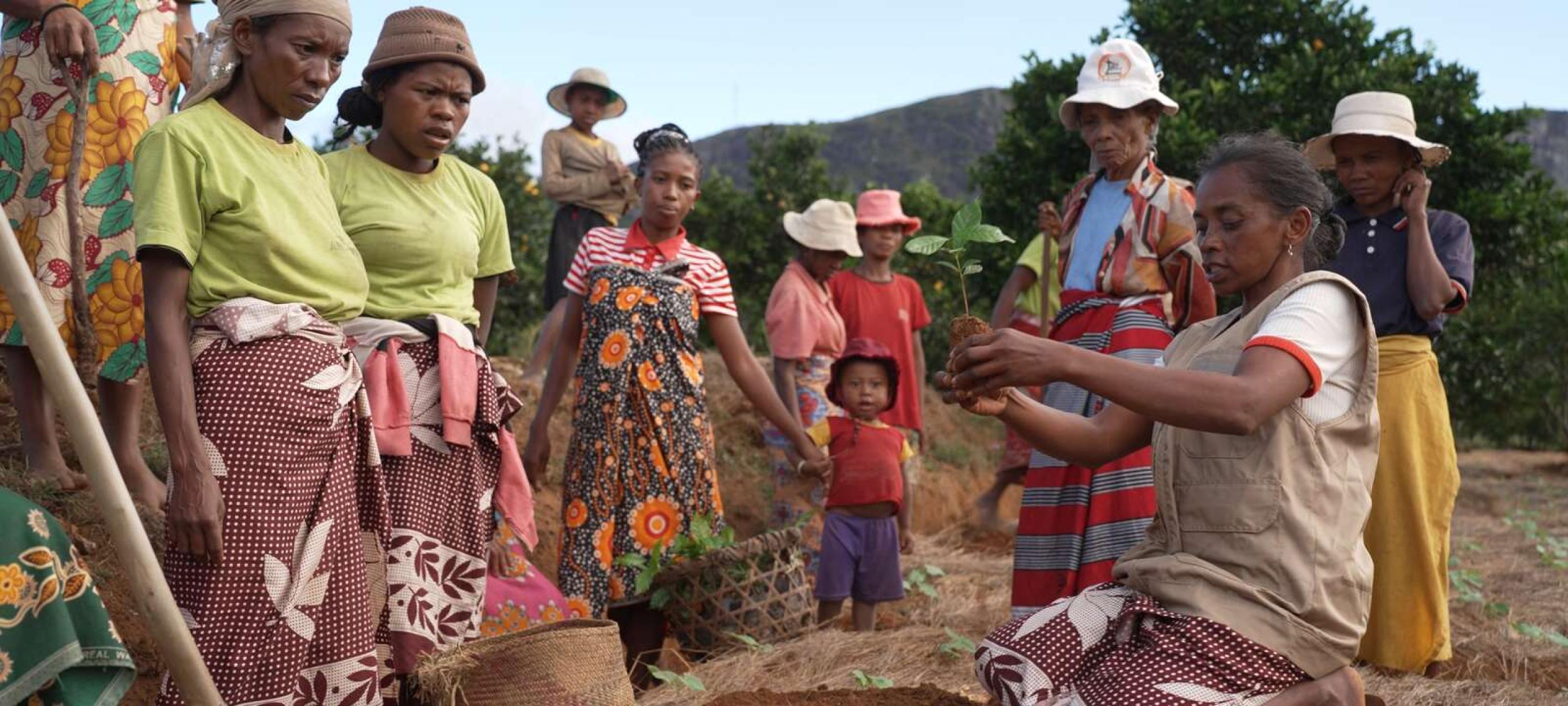
Women farmers, led by Ernestine Razafindravola (right), the head of the Soa Te Hivoatra Women’s Association, plant crops using adaptation techniques in Androy Village, East Madagascar. Photo credit: GCF/Little Big Films
Through a local association supported by the Green Climate Fund (GCF), she received training in sustainable agricultural practices, support from local trainers, and resources such as seeds and seedlings. By applying these techniques, Ernestine transformed her farm, achieving year-round food security and producing over 200 kilograms of beans per season. Her increased income allowed her to build a new house, install solar power, and improve her family’s quality of life.
Across Madagascar, women are restoring ecosystems by planting native trees, conserving water, and regenerating soil health. Their efforts not only improve biodiversity, reduce carbon emissions, create jobs, and ensure food security but also empower them financially, fostering independence and resilience. Through their participation, women gain valuable skills in organising their lives, balancing household responsibilities, and taking on leadership roles within their communities.
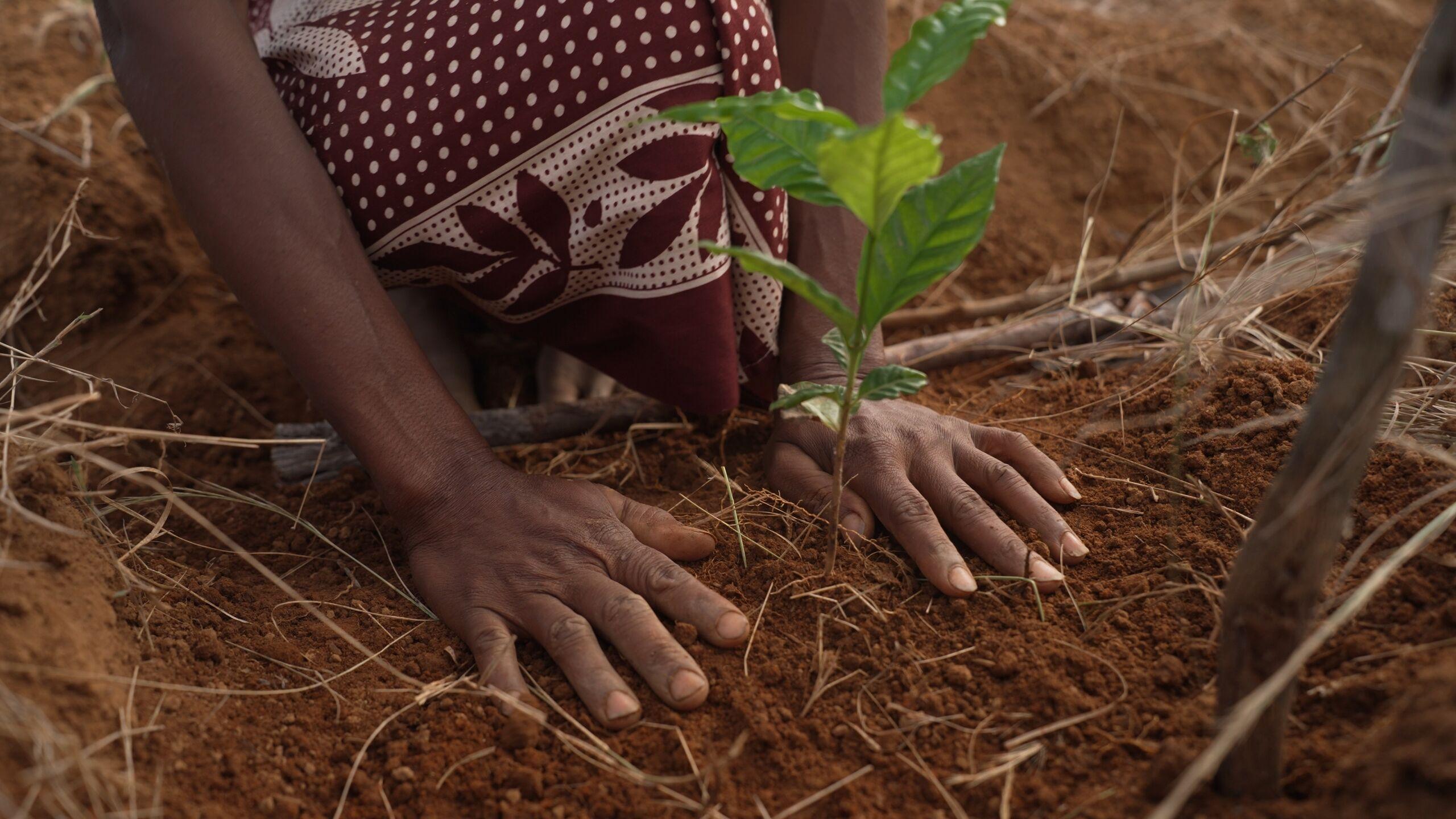
Ernestine Razafindravola, lead of the Soa Te Hivoatra women’s Association, works at an Agriculture Showcase farm, Androy Village, East Madagascar. Photo credit: GCF/Little Big Films
On International Women’s Day, we celebrate these women, whose leadership proves that empowering women is key to addressing climate change and achieving gender equality.
These initiatives are part of the “Sustainable Landscapes in Eastern Madagascar” project funded by GCF and implemented by Conservation International. This project aimed to reduce deforestation and strengthen climate resilience through sustainable forest management and climate-resilient agriculture. Learn more about the project here.
Read the impact evaluation findings in the report by GCF’s Independent Evaluation Unit.
Written by Jin Hee Dieu